Top 10 Traditional Foods You Must Try in Gilgit-Baltistan
Discover 10 traditional foods you must try in Gilgit-Baltistan, Pakistan. From delicious chapshuro and savory mamtu to hearty harissa, local breads, and authentic mountain dishes, explore the region's rich culinary traditions and unique flavors.
Top 10 Traditional Foods You Must Try in Gilgit-Baltistan
Introduction
Gilgit-Baltistan is famous not only for its breathtaking mountains, beautiful valleys, and turquoise lakes but also for its unique traditional cuisine. The region's food reflects its mountain lifestyle, local ingredients, cultural heritage, and centuries-old cooking traditions.
From freshly prepared chapshuro to steamed mamtu and comforting bowls of harissa, traditional food offers visitors a delicious way to experience local culture. Recipes and names can vary between Hunza, Nagar, Gilgit, Baltistan, and other communities.
If you are planning a trip to northern Pakistan, here are 10 traditional foods to try during your journey.
1. Chapshuro
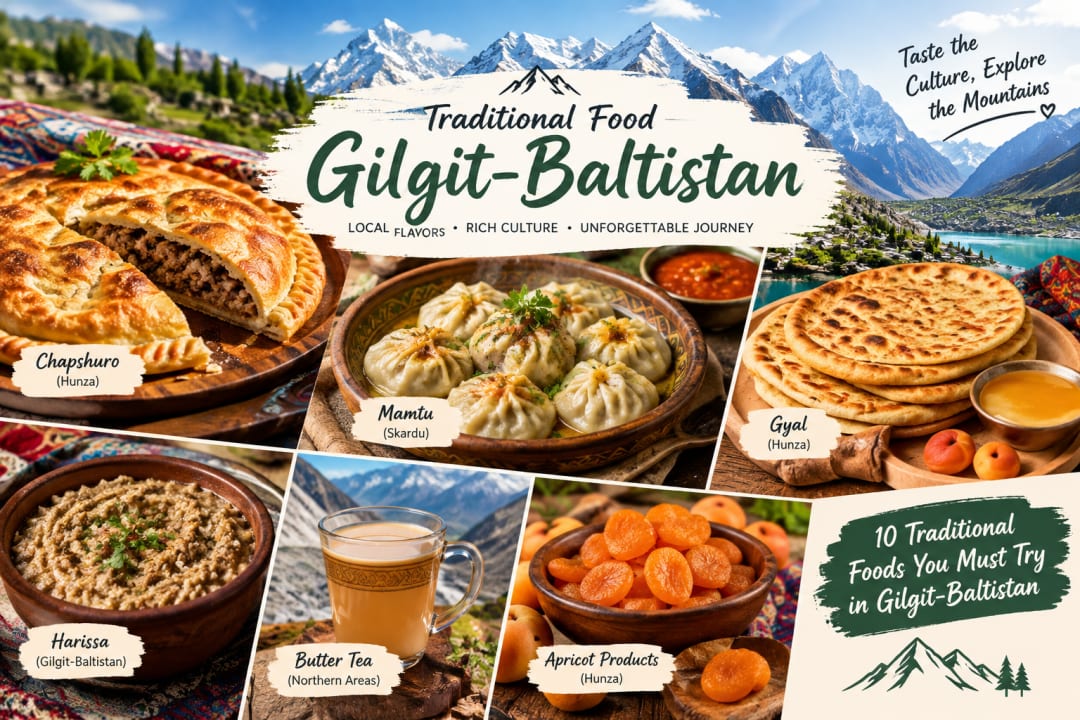
Chapshuro is one of the best-known traditional foods of Hunza and nearby areas. Often described as a local meat pie, it consists of thin dough filled with seasoned minced meat, onions, and spices before being cooked until golden.
Some versions use beef or yak meat, while recipes and seasonings vary from place to place. Chapshuro is popular with both locals and tourists because it is filling, flavorful, and easy to enjoy while traveling.
Where to try it: Local restaurants and bakeries in Hunza, Karimabad, and nearby towns.
2. Mamtu
Mamtu is a traditional steamed dumpling enjoyed in Baltistan and other parts of the region. It is commonly filled with minced meat, onions, and seasoning, then steamed until tender.
Mamtu is often served hot with chutney or another accompanying sauce. It is a comforting choice during cold mountain weather and a favorite for visitors interested in regional cuisine.
Where to try it: Restaurants and local eateries in Skardu and other parts of Baltistan.
3. Harissa
Harissa is a hearty traditional dish prepared by slowly cooking meat with wheat or other grains until the mixture becomes soft and thick. The long cooking process creates a rich texture and satisfying flavor.
It is especially associated with winter meals and special occasions in some communities. Harissa is a wonderful dish for travelers who want to experience traditional home-style cooking.
Where to try it: Ask local restaurants or families about seasonal availability, as recipes and serving times vary.
4. Gyal
Gyal is a traditional food associated particularly with Hunza. It is a type of flatbread or pancake made using local grains, with recipes that differ among households and villages.
Depending on the preparation, gyal may be served with butter, apricot oil, or other local accompaniments. It offers a taste of the region's agricultural traditions and locally grown ingredients.
Where to try it: Traditional food spots and local homes in Hunza.
5. Diram Phitti
Diram phitti is a traditional Hunza bread commonly made using sprouted wheat flour. The sprouting and preparation process gives it a distinctive flavor and connects it with the region's traditional food practices.
It may be served with butter, apricot oil, or other accompaniments. Visitors interested in local food heritage should look for it at traditional eateries or cultural food experiences.
Where to try it: Hunza villages and eateries serving regional specialties.
6. Marzan
Marzan is a traditional food associated with Baltistan. It is generally prepared using buckwheat flour and is known for its dense, filling texture.
The dish reflects the importance of locally available grains in the region's mountain cuisine. It is often enjoyed with butter or other accompaniments, depending on local and family traditions.
Where to try it: Traditional eateries in Skardu and other Baltistan communities.
7. Balay
Balay is a traditional noodle soup associated with Baltistan. It is generally served in a warm broth, making it a comforting choice in the region's cool climate.
Recipes vary, and some versions include meat or vegetables. For travelers exploring Skardu and surrounding valleys, balay offers an opportunity to experience the region's distinctive food traditions.
Where to try it: Local restaurants serving Balti cuisine.
8. Prapu
Prapu is a traditional Balti dish made with small pieces of dough or pasta served with a flavorful sauce. Preparations may include ground apricot kernels or other local ingredients, depending on the recipe.
Its distinctive taste and texture make it an interesting choice for visitors wanting to try something beyond familiar restaurant dishes.
Where to try it: Traditional Balti restaurants in Skardu and nearby areas.
9. Butter Tea
Butter tea is a traditional drink enjoyed in several high-altitude communities across the broader Himalayan and Karakoram region. It is commonly prepared with tea, salt, and butter, producing a rich and savory flavor rather than the sweetness of ordinary milk tea.
The drink is associated with cold-weather hospitality and local customs. Its taste may be unfamiliar to first-time visitors, but trying it can be a memorable cultural experience.
Where to try it: Local homes and traditional eateries, particularly in communities where it remains part of everyday life.
10. Local Apricot Products
Apricots are an important traditional crop in parts of Gilgit-Baltistan, particularly Hunza and surrounding valleys. Visitors can discover dried apricots, apricot kernels, jams, juices, and apricot oil.
These products reflect the region's agricultural heritage and are popular as snacks or gifts to take home. Availability varies by season, and local markets are a good place to explore the different products.
Where to try it: Village markets, local shops, and seasonal fruit stalls in Hunza and other apricot-growing areas.
Why You Should Try Traditional Food in Gilgit-Baltistan
Traditional cuisine is an important part of the travel experience. Local dishes offer a glimpse into the daily lives, farming practices, hospitality, and cultural diversity of the region.
While exploring Gilgit, Hunza, Nagar, and Skardu, look for small local eateries and ask residents about seasonal specialties. You may discover family recipes and regional variations that are not commonly found on standard restaurant menus.
Tips for Food Lovers Visiting Gilgit-Baltistan
- Ask about local specialties when visiting a new town or village.
- Try seasonal dishes, as some traditional foods are not available throughout the year.
- Ask about ingredients if you have food allergies or dietary restrictions.
- Explore local markets for dried fruits, nuts, and regional products.
- Respect local customs when dining in traditional homes.
- Carry cash for small eateries and village shops.
- Ask permission before photographing people or private food gatherings.
Conclusion
Gilgit-Baltistan offers a memorable culinary journey alongside its spectacular mountain scenery. From the savory filling of chapshuro and the comforting taste of mamtu to traditional breads, Balti specialties, butter tea, and locally grown apricots, every dish tells part of the region's story.
During your next visit to Hunza, Nagar, Gilgit, or Skardu, take time to explore the local cuisine and discover the flavors that make northern Pakistan special.
Travel tip: Combine sightseeing with local food experiences to make your Gilgit-Baltistan trip even more memorable.
Frequently Asked Questions
1. What is the most famous traditional food in Hunza?
Chapshuro is among the best-known foods associated with Hunza and is a popular choice for visitors.
2. What food is famous in Skardu?
Skardu and the wider Baltistan region are known for foods such as mamtu, balay, prapu, and marzan, although recipes vary locally.
3. Is traditional food in Gilgit-Baltistan spicy?
Some dishes use mild seasoning, while others include stronger spices. The flavor depends on the recipe and the cook.
4. What traditional drinks should I try?
Butter tea is a distinctive traditional drink in some communities. You may also find locally prepared fruit juices and apricot-based drinks.
5. What local food products can I buy as souvenirs?
Dried apricots, apricot products, nuts, and other locally produced foods are popular options. Check packaging and travel rules when taking food across borders.
6. Where can tourists find traditional food in Gilgit-Baltistan?
Traditional foods can be found in local restaurants, village eateries, markets, and selected guesthouses throughout Gilgit, Hunza, Nagar, and Skardu.